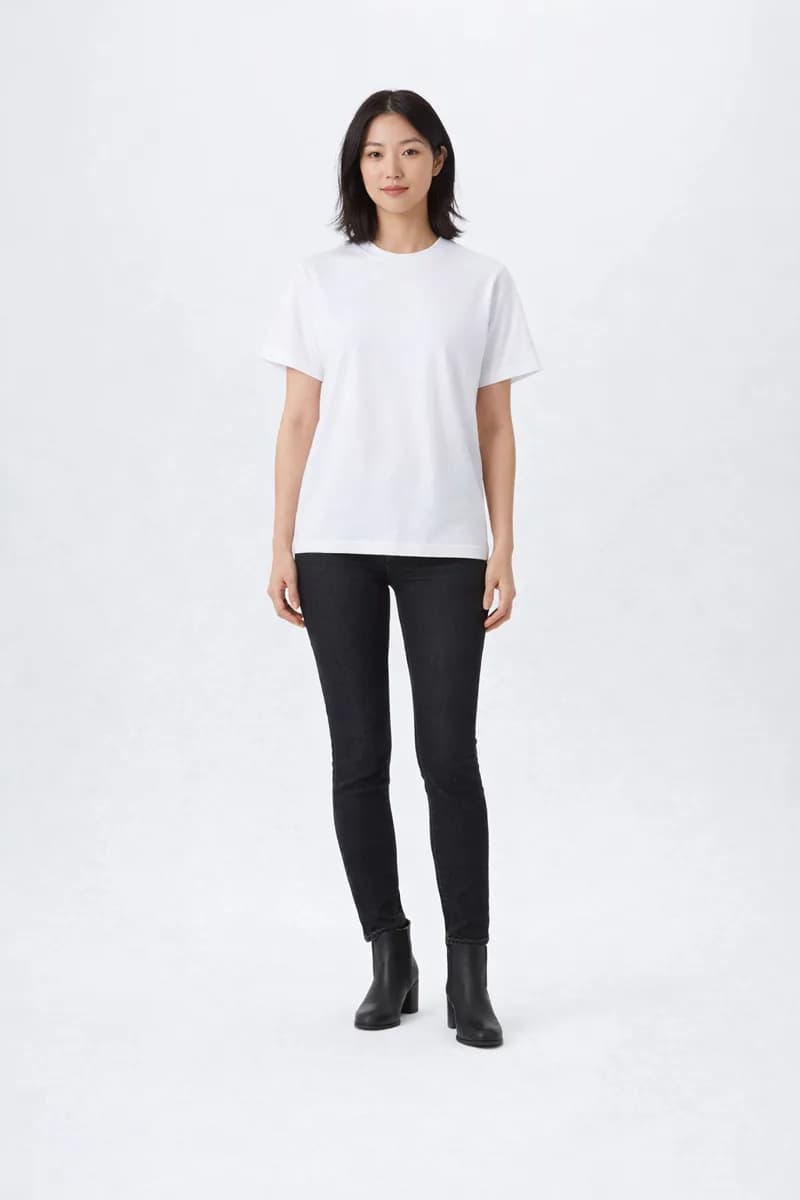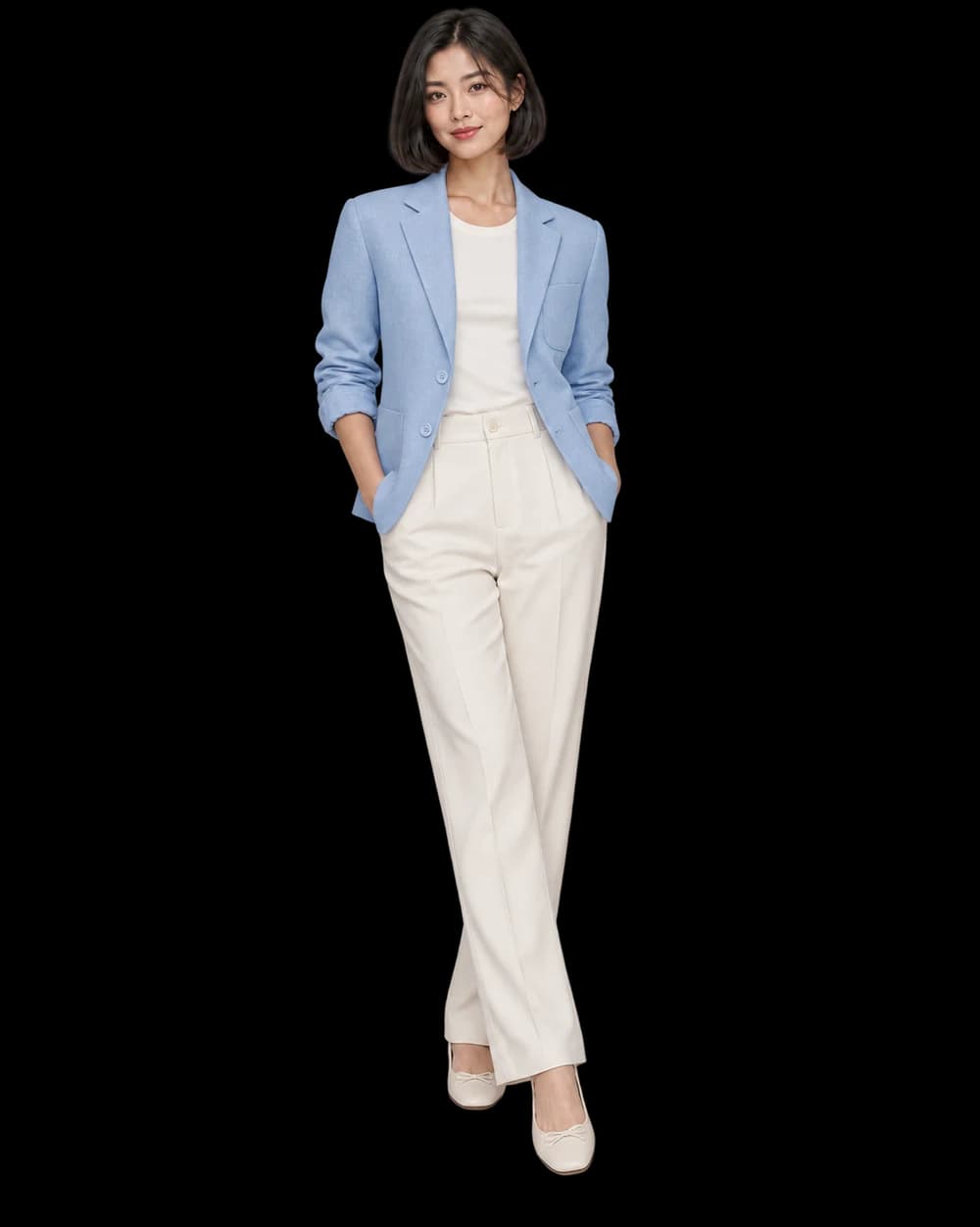
Review what the garment is before judging how the photograph feels.
Make the reference your standard
An attractive on-model image can earn approval before anyone notices a changed neckline. Avoid that by reviewing with the source open beside the result. The reference, rather than the mood of the new photograph, should answer the basic question: is this still the item you sell? AI imagery needs this check even when the overall impression feels convincing.
Use the clearest source you have. If a detail is invisible in the input, do not assume a generated image can establish its true shape. A second original photo may help you review the result, even when you are only using one product image for generation. Keep that original evidence available to whoever approves the campaign.
Read the silhouette before the styling
Start with the outline. Check the length of the body and sleeves, the width of the shoulder, the rise of the trousers and the position of the hem. Compare proportions rather than the model’s pose alone. A tucked shirt, bent elbow or turned torso can obscure a mismatch; it can also make a correct garment difficult to evaluate.
Next, inspect the features that define the cut: neckline, lapels, pocket placement, fastening and panel structure. If the direction keeps hiding those features, ask for a simpler pose or more direct camera angle. A straight, readable sample is often a better review image than the most expressive editorial frame.
Separate light from material changes
Warm light can shift the appearance of color, while shadows can make a lightweight fabric seem heavy. Compare neutral areas in the source and result before deciding whether the treatment is acceptable. If customers need an accurate color reference, keep an original product photograph in the asset set instead of relying on an atmospheric scene to do every job.
Inspect prints, weave, transparency and sheen. Follow a stripe across the garment and check whether the pattern spacing remains plausible. Look closely at lettering and small branding. Do not approve invented wording, added logos or a changed motif because it seems minor in the full composition.
Look where the body meets the garment
Hands, waistbands, cuffs and layered edges deserve a second pass. These are the places where a pose can conceal a construction change or create an impossible overlap. Check that buttons connect to a believable opening and that straps, sleeves and fabric folds have somewhere sensible to go.
Then view the image at its final size. A defect obvious at full resolution may be hidden in a thumbnail, while a crop can remove the very feature that explains the fit. Review both the source-sized file and the intended placement. Neither view replaces the other.
Record a specific next decision
Classify your response as accept, revise the direction, or replace the input. Be concrete: ‘left cuff shape changed’ leads to a better next attempt than ‘looks wrong.’ If fidelity remains uncertain, retain the real product image for that use. An AI sample is an asset candidate, not evidence of measurements, fit or fabric performance.
- Silhouette and construction match the original
- Color, pattern and material remain credible
- Branding and fastenings survive close inspection
- The customer-facing crop keeps essential details visible