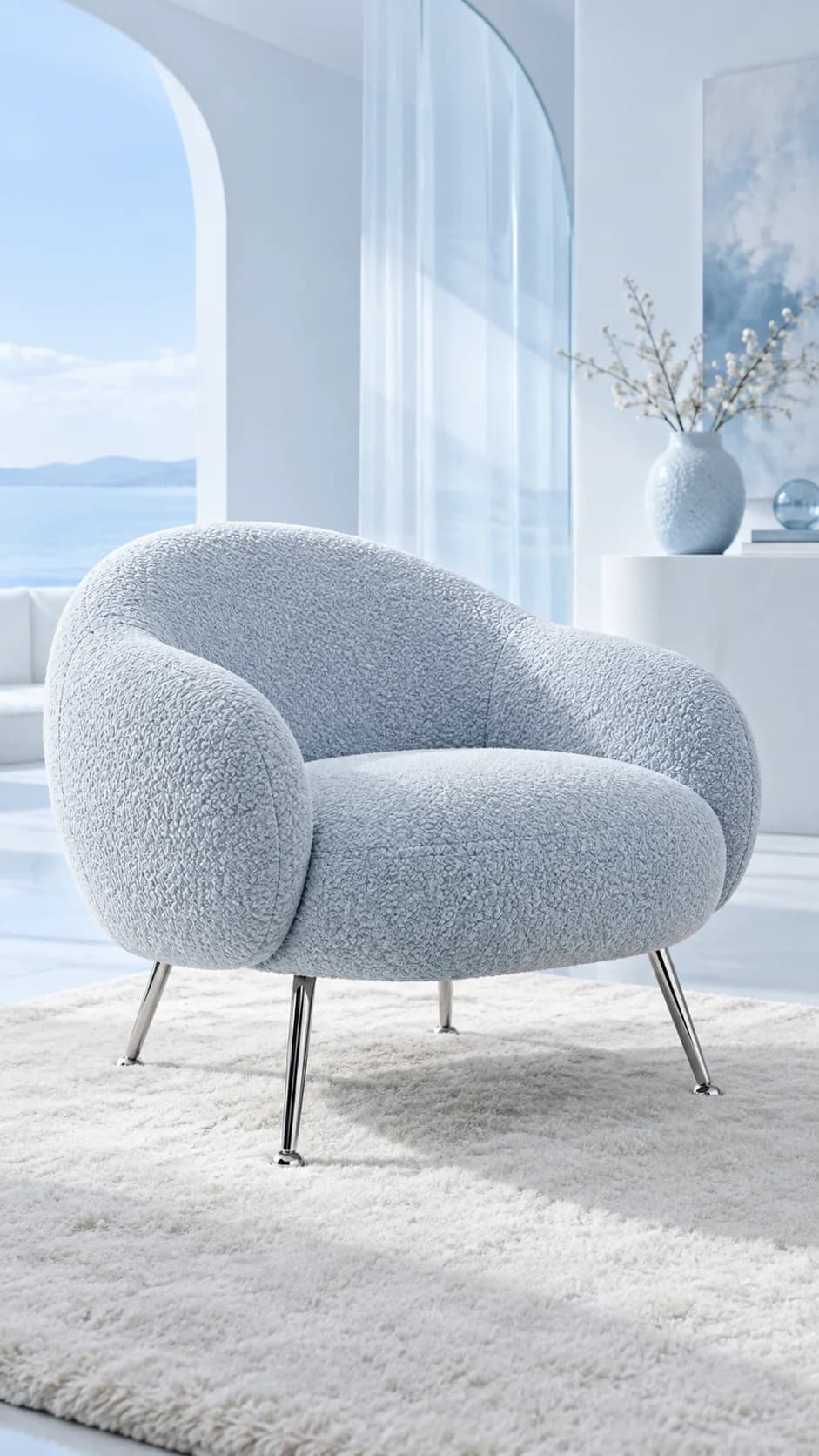
All legs, arms and outer edges. Joinery and component count. Material, upholstery and proportions.
Keep the entire piece available to inspect
Furniture needs room in the frame. A chair cropped through a leg or a table cut off at the edge cannot fully explain its construction. Start with a source showing the complete piece, including feet, backrest and arms where present. Remove visual competition by choosing an original that clearly separates the subject from nearby furniture.
Decide whether the first image should be a neutral catalog view or an interior scene. A clean three-quarter angle is often useful for reading construction. Establish that view before asking an elaborate room to carry the product story.
Count the components and follow their connections
Compare legs, rails, arms, shelves and cushions against the original. Follow the places where they connect, looking for an added support, missing joint or altered angle. An attractive wood grain or upholstery texture can distract from a structural change, so inspect the outline before the finish.
Check apparent proportions, but keep actual measurements in the product information. A generated room can suggest context without accurately proving scale. Avoid treating a nearby chair, person or doorway as a reliable measuring reference unless that relationship has been independently established.
Let the setting stay quiet enough to judge
Use restrained light and a sparse room for the first sample. Heavy shadows can hide legs or turn a material into a different finish. Inspect contact with the floor and whether the piece appears grounded. Keep every outer edge within the final image, including the crop used on smaller screens.
Once the product passes review, explore a more expressive interior as a separate asset. Retain original photography for construction, color and dimensions, and approve generated scenes for the role they can serve accurately. A convincing room is useful creative, not evidence of how a piece will fit a customer's space.