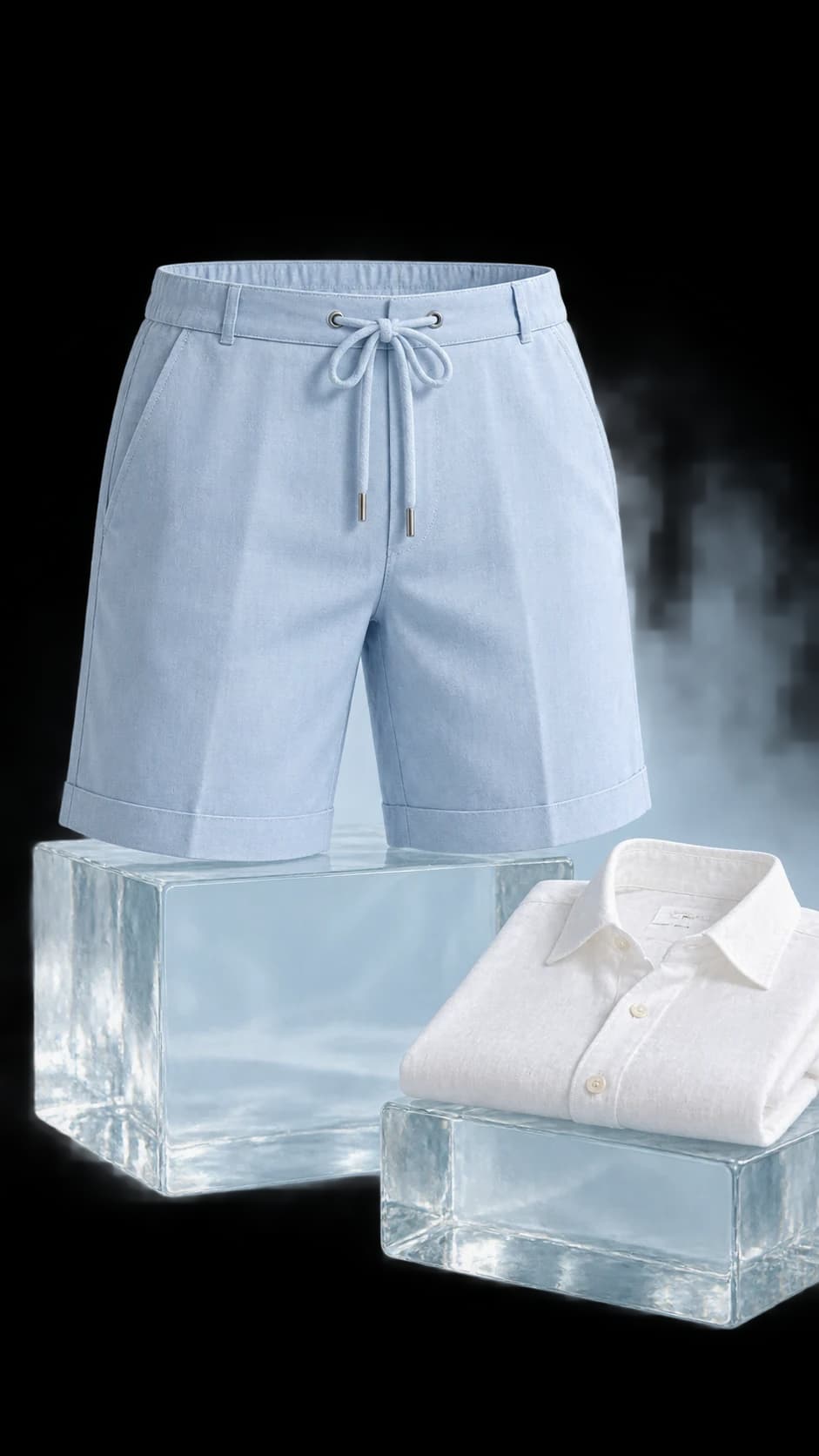
Waistband and rise. Pocket shape and fastening. Both hems and leg openings.
Start with the proportion customers need to see
For shorts, a small change in apparent length can change the entire impression of the product. Keep the waistband and both hems visible in the source and in the first sample. A tightly cropped lifestyle image may communicate a season, but it is a weak reference for the garment itself.
Describe the construction that matters: pleats, elastic, belt loops, drawstring, cuffs or pockets. Avoid replacing those details with a generic style adjective. A clear brief says what the shorts are before it says where the campaign takes place.
Keep styling from becoming an obstruction
An untucked shirt can hide the rise and fastening, while a seated pose can obscure the leg opening. Choose a straightforward standing direction for the first on-model review. If the final campaign needs a more relaxed pose, create it after establishing a readable sample rather than using it as the only view.
For a product-led shot, arrange the legs naturally instead of stretching the waistband or flattening every fold. Review whether the generated image has changed the width of the opening, the position of a pocket or the shape of a cuff. Keep fabric texture visible without adding an unsupported impression of stretch.
Review both sides independently
Compare the left and right hems, pockets and seams. A plausible asymmetry caused by a pose is different from a changed garment, so use the original as the reference and simplify the view if you cannot tell. Check the full image and the small crop planned for a collection page.
Seasonal context can come from warm light or a restrained architectural setting. It does not need props that hide the product. Keep accepted shorts images together at a similar scale, and preserve original photography for measurements, fit and construction information that the campaign image cannot establish.